India-Israel Relations, 2026
Introduction
After Prime Minister Narendra Modi’s official visit to Israel in February 2026, India-Israel relations were upgraded to a “Special Strategic Partnership for Peace, Innovation, and Prosperity.” In addition to reaffirming their commitment to international frameworks like I2U2 and the India-Middle East-Europe Economic Corridor (IMEC), both countries inked agreements on defense, technology, and agriculture.
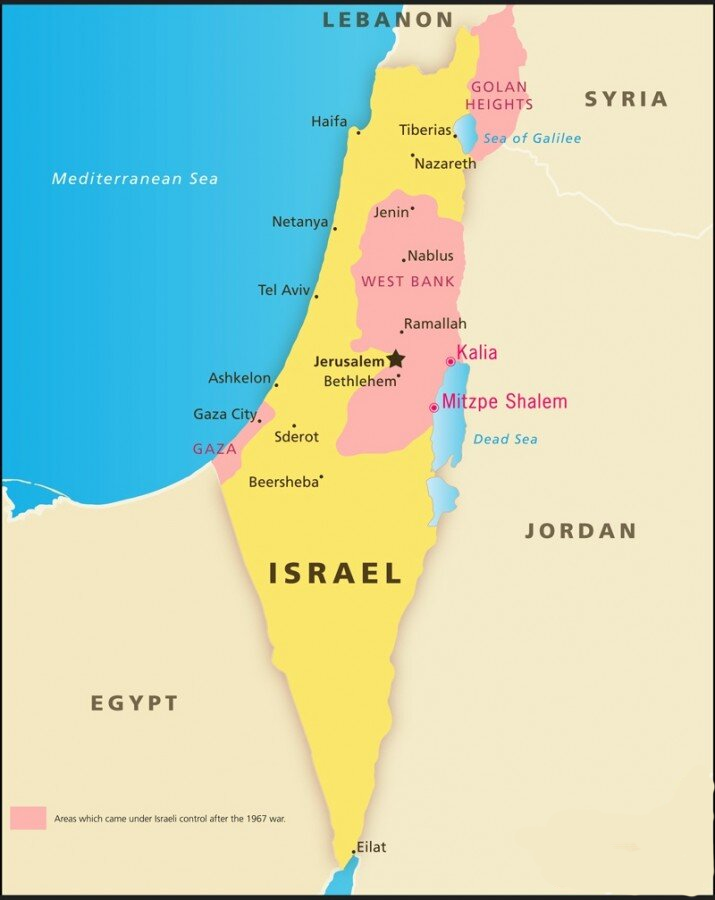
How have India-Israel Relations Evolved?
- Early Years
- Due in significant part to Cold War allegiances and India’s long-standing support for the Palestinian cause, India formally recognized Israel in 1950 but did not establish full diplomatic ties until 1992.
- De-hyphenation Policy
- The official transition to a “de-hyphenation” policy began in 2017 with the Indian Prime Minister’s first visit to Israel. This made it possible for India to handle its ties with Israel without regard to its position on Palestine.
- Current Status (2026)
- A distant buyer-seller dynamic has given way to a close strategic, technical, and defense alliance.
- Minilateral frameworks such as the critical India-Middle East-Europe Economic Corridor (IMEC) and I2U2 (India, Israel, USA, UAE) are progressively influencing it.
- Economic & Commercial Relations
- Despite regional interruptions, India-Israel commerce has increased from USD 200 million to USD 3.75 billion (FY 2024–25) since 1992.
- India is Israel’s second-largest Asian trading partner.
- India imports diamonds, fertilizers, petroleum products, machinery, and defense equipment; it exports pearls and precious stones, diesel, chemicals, machinery, textiles, and agricultural products.
- Israeli Foreign Direct Investment (FDI) in India totaled USD 334.2 million (2000–2024), demonstrating consistent bilateral investment flows, whereas India’s cumulative ODI to Israel was USD 443 million (2000–2025).
- Innovation & Technology
- The India-Israel Industrial R&D and Innovation Fund (I4F) (2023–2027) is one initiative that aims to promote collaborative research and technical developments.
- Defence Cooperation
- Naval port visits and involvement in drills like Blue Flag are examples of defense links.
- The two nations co-developed the Barak-8 missile system, and India is one of the biggest importers of Israeli military hardware. Additionally, the Indian Navy frequently makes port visits in Haifa, Israel.
- Agriculture Cooperation
- 43 Indo-Israel Centers of Excellence (CoE), high-tech, intensive agricultural hubs designed to promote the transfer of Israeli agri-technologies tailored to regional requirements, are located in India.
- Water Cooperation
- The 2016 Memorandum of Understanding on Water Resources promotes cooperative efforts in integrated water management, conservation, and irrigation improvements.
What is the Significance of India-Israel Relations?
For India
- Strengthens Defence Preparedness: In order to close capability gaps along hostile borders, cooperation with Israel gives India access to cutting-edge military technologies like Phalcon AWACS (airborne warning and control systems), Heron, Searcher-II, and Harop drones, Spyder quick-reaction anti-aircraft missile systems, and electronic warfare tools.
- Promotes Defence Indigenisation: In order to help Atmanirbhar Bharat in defense production, joint development projects such as the Barak-8 missile system signify India’s shift from a consumer to a co-developer.
- Enhances Water Security: India’s water-scarce areas, particularly in the western and peninsular states, can find sustainable solutions thanks to Israeli experience in desalination, drip irrigation, and wastewater recycling.
- Supports West Asia Balancing Strategy: India’s strategic autonomy and multi-alignment in West Asia are demonstrated by its strong connections with Iran, the Gulf nations, and Israel.
- Enhances Connectivity And Geo-Economic Influence: By taking part in programs like IMEC and I2U2, India improves its access to European markets and establishes itself as a major participant in developing trade corridors.
For Israel
- Increases Strategic Presence in Asia: Israel’s partnership with India increases its geopolitical significance outside of Western allies and fortifies its diplomatic outreach to the Global South.
- Maintains Stability for the Defense Sector: India’s status as a significant defense partner offers Israel a stable market as well as chances for cooperative manufacturing and innovation.
- Resolves Labor Shortages: Indian laborers boost Israel’s infrastructural development and economic stability by working in the country’s construction, caregiving, and service industries.
What are the Challenges in India-Israel Relations?
- The Iran Dilemma: Iran is a menace to Israel’s existence. On the other hand, India sees Iran as a vital strategic partner for regional connectivity and energy security, particularly through the Chabahar Port, which gives India access to Afghanistan and Central Asia without going through Pakistan.
- The Palestinian Stance: India has traditionally and formally backed a two-state resolution to the Israel-Palestine dispute. During Middle East escalations, maintaining the “de-hyphenation” approach becomes more challenging.
- The China Factor: China continues to be Israel’s biggest Asian commercial partner. Previous examples of significant Chinese investment in Israeli technology and infrastructure have increased India’s security concerns, necessitating cautious diplomatic maneuvering to maintain the security of common defense technologies.
- Intellectual Property Rights Concerns: Israel’s economy is based on high-tech exports. Concerns about India’s comparatively lax intellectual property rights laws, which impede the transfer of sensitive software, digital inventions, and agricultural technologies, are common among Israeli technology companies and other Western countries.
- Risk to Megaprojects: The goal of large-scale multilateral connectivity initiatives like the IMEC is to link Indian products to European markets by utilizing Israeli infrastructure, such as the Port of Haifa.
What Measures can Strengthen India-Israel Relations?
- Institutionalising Minilateral Cooperation: Boost I2U2 to fund corridors for food security and green energy. To safeguard IMEC and important ports like Haifa, create a framework for maritime security that includes cooperative naval drills.
- Shift To Defence Co-Production: In UAVs and electronic warfare, switch from the buyer-seller paradigm to cooperative R&D and jointly held defense intellectual property. Utilize India’s industrial capacity to export defense equipment made together to Southeast Asia and Africa.
- Implement Innovation and Labour Agreements: Boost business transactions and save remittance expenses by expediting UPI connectivity. Operationalize the Cyber Center of Excellence for digital security and capacity growth.
- Diversify Trade and Technology Cooperation: Finalize the Free Commerce Agreement to increase commerce beyond chemicals and diamonds. Encourage Israeli involvement in green technology and India’s semiconductor ecosystem.
- Strengthen Academic and People-Level Engagement: Increase collaborative research and academic relationships in desalination, artificial intelligence, and desert agriculture. Encourage Track 1.5 and Track 2 diplomacy to maintain relationships despite changes in geopolitics.
What are the Key Outcomes of the Prime Minister of India State Visit to Israel?
Technology
- Indo-Israel Cyber Centre of Excellence (CoE)
- In order to promote digital resilience, highlight cutting-edge technology, and create connections between government, academia, and business, a Letter of Intent (LoI) was signed to establish the Indo-Israel Cyber Center of Excellence (CoE) in India.
- Artificial Intelligence (AI)
- A special Memorandum of Understanding to support civilian applications, public-private capacity building, and ethical AI development.
- A Memorandum of Understanding was also inked to support AI-enabled education, emphasizing human-centered learning, creative pedagogy, fair access to AI, and the incorporation of AI and data literacy into the educational system.
- Horizon Scanning
- A signed Declaration of Intent (DoI) to work together on long-term technology planning, risk assessment, and strategic foresight utilizing AI-driven solutions.
- Geophysical Exploration
- MoU formed to encourage data exchange and sustainable mineral exploration using cutting-edge AI and geophysical technology.
- Critical and Emerging Technologies
- The Joint Commission on Science and Technology (JCM) was elevated to the Ministerial level by both nations, and the National Security Advisors of Israel and India will spearhead a new effort on Critical and Emerging Technologies.
Economic Integration and Financial Cooperation
- UPI Integration: A historic Memorandum of Understanding to facilitate cross-border transfers between Israel and India using the country’s own Unified Payments Interface (UPI).
- Financial Services Cooperation: An agreement to exchange best practices in fintech, regtech, and regulatory frameworks between the Israel Securities Authority (ISA) and the International Financial Services Centers Authority (IFSCA) of India.
- Commercial Arbitration: An agreement to improve alternative dispute resolution procedures between the Israeli Institute of Commercial Arbitration (IICA) and the Indian Council of Arbitration (ICA).
Agriculture and Allied Sectors
- India-Israel Innovation Centre for Agriculture (IINCA): ICAR and MASHAV signed a Memorandum of Understanding for the India-Israel IINCA to promote pest control, precision farming, irrigation technology, and farmer capacity building.
- Fisheries and Aquaculture: Collaboration on tech-driven, sustainable methods, such as disease control, mariculture, and seaweed research and development via a new Center of Excellence.
Culture and Heritage
- Academic interchange: A Memorandum of Understanding between Nalanda University and the Hebrew University of Jerusalem (HUJI) for the interchange of teachers and students in disciplines such as international relations, mathematics, Buddhist studies, and archaeology.
- National Maritime Heritage Complex (NMHC), Lothal: Israel and India will work together to build the National Maritime Heritage Complex (NMHC), Lothal, in Gujarat. Through research and displays, the NMHC will honor common nautical heritage.
Conclusion
The India‑Israel Relations in 2026 represent a new chapter of strategic depth, innovation, and shared prosperity. With the elevation to a Special Strategic Partnership, both nations are poised to collaborate more closely in defence, technology, agriculture, and global governance. As India balances its Middle East diplomacy, Israel remains a trusted partner in shaping a secure and innovative future.
Frequently Asked Questions (FAQs)
Why is the Indo-Israel Cyber Center of Excellence important?
It seeks to improve cybersecurity capacity building, digital resilience, and business, government, and academic cooperation in developing technologies.
In what ways can the integration of UPI with Israel improve bilateral relations?
Low-cost international transfers, more fintech collaboration, and smooth commercial transactions are all made possible by the UPI connection.
Describe the India–Israel Innovation Center for Agriculture (IINCA).
ICAR and MASHAV will collaborate to create a center that will support farmer capacity building, pest control, precision farming, and irrigation technology.
What makes the Free Trade Agreement between Israel and India significant?
It seeks to increase market access, improve economic integration, and diversify commerce beyond diamonds and chemicals.
Sources:
- https://www.mea.gov.in/bilateral-documents.htm?dtl/40828/India__Israel_Joint_Statement_February_26_2026
- https://www.pib.gov.in/PressReleseDetailm.aspx?PRID=2233269®=3&lang=2
- https://www.bbc.com/news/articles/cly14vppym2o
- https://www.indembassyisrael.gov.in/pages?id=nel5a&subid=7ax9b
- https://en.wikipedia.org/wiki/India%E2%80%93Israel_relations
Leave a Reply