

Rashtriya Swayamsevak Sangh (RSS) in India: Legal Status, Historical Bans, and Challenges
Introduction
The Rashtriya Swayamsevak Sangh (RSS) legal status became a topic of public discussion when political figures questioned why the biggest socio-cultural organization in India is still operating without official legal registration.
What is Rashtriya Swayamsevak Sangh (RSS)?
- RSS, or Rashtriya Swayamsevak Sangh, is a voluntary socio-cultural organisation established in 1925. Its stated objective is nation-building through character development, social service, and cultural awareness.
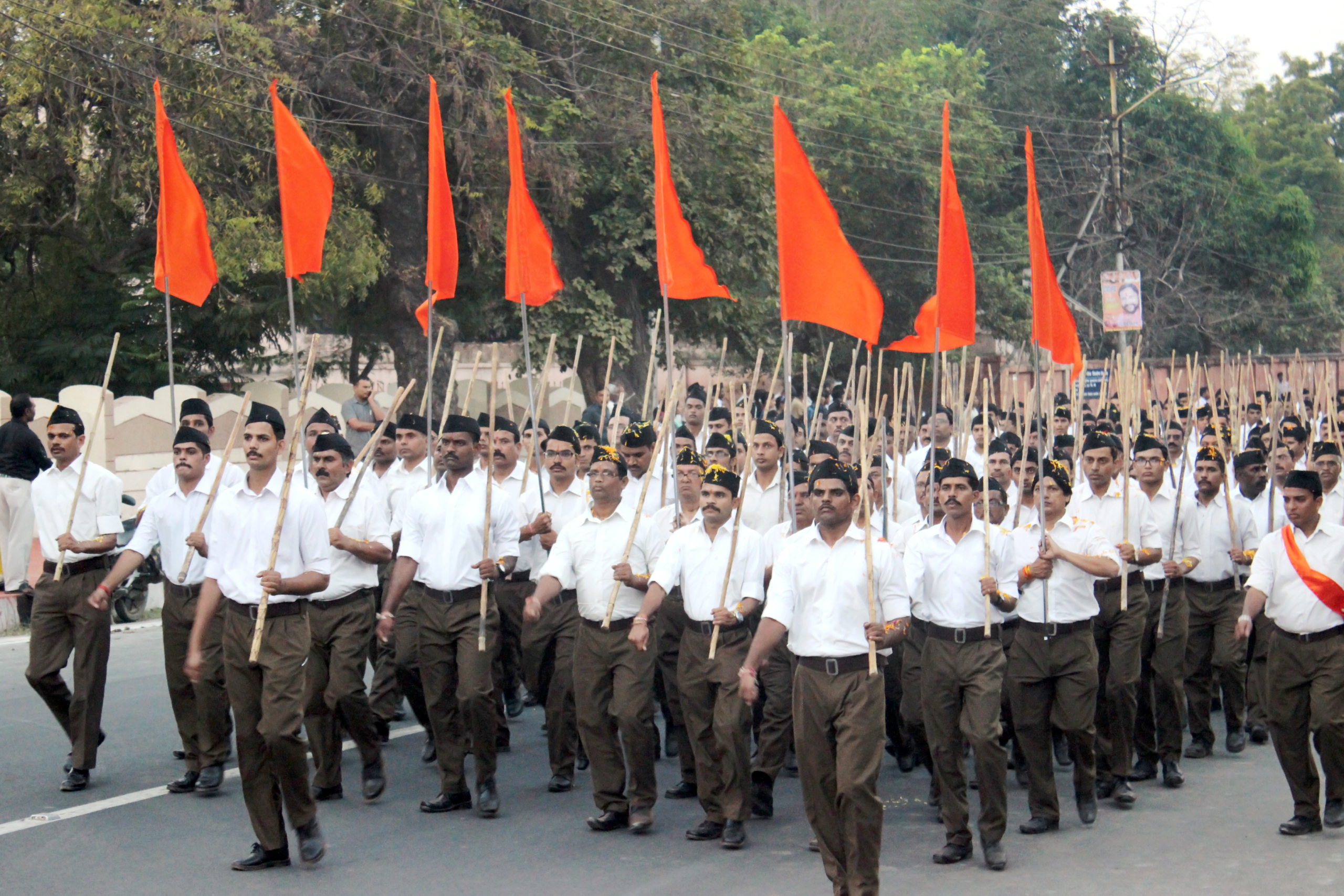
- Unlike political parties, trade unions, or registered societies, RSS functions primarily through local branches known as “Shakhas.” Participation is voluntary, and the organisation traditionally operates without formal membership cards or centralised enrollment systems.
- Today, RSS has thousands of branches across India and numerous affiliated organisations working in education, social service, labour welfare, tribal development, and other sectors.
What is the Legal Status of the Rashtriya Swayamsevak Sangh (RSS)?
- An acknowledged “Body of Individuals”
- A “juristic person” (such as a registered business, trust, or organisation) has a distinct legal personality from its members under Indian law, which allows it to sign contracts, hold property, and file or defend legal actions in its own name.
- The RSS lacks its unique “juristic personality” because it is not registered under the Companies Act (2013), the Indian Trusts Act (1882), or the Societies Registration Act (1860).
- Rather, the RSS is formally recognised as a Body of Individuals (BOI) by Indian courts and tax officials.
- According to Section 2(31) of the Income Tax Act, 1961, a BOI is a group of people who assemble together for a common goal or activity and are regarded as a distinct taxable entity. It does not grant legal personality or registration; it is merely a tax categorisation.
- Registration is Optional
- In India, there isn’t a general rule requiring all citizen associations to register.
- The Indian Constitution’s Article 19(1)(c) guarantees citizens the fundamental freedom to organise unions or groups.
- Generally speaking, an organisation only needs to register if it wants to take advantage of certain statutory rights like limited liability, government funding, or foreign money acceptance (which necessitates FCRA registration).
- The Supreme Court made it clear in All India Bank Employees’ Association v. National Industrial Tribunal (1961) that although citizens are free to organise associations, their operations are nonetheless governed by legitimate laws on labour, taxes, public order, and regulation.
- The “Principle of Mutuality” and Taxes
- The RSS’s swayamsevaks (volunteers) “Guru Dakshina” (voluntary yearly financial gifts) are its main source of support.
- The Income Tax Bureau tried to tax this cash in the 1970s. However, in Commissioner of Income-Tax v. Rashtriya Swayamsevak Sangh (1994), the Patna High Court and the appellate authority ultimately decided in favour of the RSS.
- A well-known tax law principle, known as the Principle of Mutuality, which holds that an entity cannot profit from itself, was used by the courts. The “Guru Dakshina” is exempt from income tax since the money is gathered by the members, from the members, and used for the members’ common goals.
- Furthermore, the RSS has a rather decentralised funding structure. Its constitution states that each local branch, or shakha, is financially independent.
- Civil Litigation and Property Management
- The RSS uses certain workarounds to navigate civil law because an unregistered body cannot directly sue or be sued in its own name:
- Representative Suits: In accordance with Order 1 Rule 8 of the Code of Civil Procedure (CPC), legal actions involving an unregistered body may be initiated through representative suits. This enables the organisation’s designated office-bearers—such as the President or Manager—to represent all members in court.
- The Supreme Court of India affirmed that the RSS might legitimately be represented in property disputes by its office bearers acting in a representative role in the seminal decision of Singhai Lal Chand Jain v. RSS (1996).
- Foreign Contribution
- RSS is not permitted to accept foreign contributions under its own name under the Foreign Contribution (Regulation) Act (FCRA), 2010.
- However, if its affiliated societies or registered trusts independently meet the FCRA rules, they may be eligible to receive foreign funds.
Is Rashtriya Swayamsevak Sangh (RSS) a Registered Organization?
- No, RSS is not a registered organization under the Companies Act, Trusts Act, or Societies Registration Act.
- Not all associations and organizations are required by Indian law to be registered. Unless an organization desires certain legal advantages or a distinct legal identity, registration is typically optional.
- RSS functions as a voluntary sociocultural organization and is based on the Indian Constitution’s Article 19(1)(c) right to form associations.
- RSS has previously been acknowledged by courts and tax authorities as a “Body of Individuals” (BOI) for specific legal and tax-related purposes.
- RSS is not unlawful because it is not registered. It still operates legally under the current legal system.
- RSS officials contend that the group has been acknowledged by governments and courts over the years and that registration was never made essential following independence.
- Opponents contend that to guarantee increased responsibility, transparency, and financial disclosure, a company of RSS’s magnitude and impact needs to register.
- Supporters contend that since RSS is not required by law to register, its current position is entirely lawful.
What are the Constitutional Rights Available to Rashtriya Swayamsevak Sangh (RSS)?
- Freedom of Association
- All citizens are entitled to establish associations, unions, and organizations under Article 19(1)(c).
- This constitutional provision is the main source of RSS’s legal legitimacy. Any attempt to outlaw the group without a valid reason will be scrutinized under the constitution.
- Freedom of Speech and Expression
- RSS is protected by Article 19(1)(a), which ensures freedom of speech and expression, much like other organizations.
- This permits RSS leaders and members to voice their ideological, social, and cultural opinions, subject to appropriate legal limitations.
- Freedom of Peaceful Assembly
- Article 19(1)(b), which gives residents the right to peacefully assemble, protects RSS activities like meetings, training courses, and public gatherings.
- For purposes of security and public order, local authorities may, nevertheless, control such events.
- Equality Before Law
- RSS is entitled to the same legal protections under Article 14 as any other legitimate Indian organization.
- If the group feels that its constitutional rights have been violated, it may file a lawsuit.
What are Historical Bans and Legal Challenges on Rashtriya Swayamsevak Sangh (RSS)?
- Ban After Mahatma Gandhi’s Assassination (1948–1949)
- On February 4, 1948, soon after Nathuram Godse killed Mahatma Gandhi, the first RSS ban was put in place. Some RSS members were accused by the Indian government of engaging in actions that endangered national security and public order.
- The official announcement stated that the restriction was due to anti-government activities, illegal arms acquisition, and violence.
- Leaders of the RSS denied any institutional role in Gandhi’s murder. The embargo was lifted in July 1949 following discussions with the government and the organization’s adoption of a written constitution.
- Ban During the Emergency (1975–1977)
- The second ban took place on June 25, 1975, when Indira Gandhi declared an emergency. On July 4, 1975, RSS was one of several organizations that were outlawed.
- RSS was charged by the government of endangering internal security and resisting the emergency. The leadership of RSS denied these accusations and insisted that the group had never encouraged violence. A large number of RSS volunteers were involved in covert resistance operations against the Emergency. After the Emergency was abolished and democratic elections were reinstated in March 1977, the prohibition came to an end.
- Ban After the Babri Masjid Demolition (1992–1993)
- After the Babri Masjid was demolished on December 6, 1992, there was a third prohibition. On December 10, 1992, the Central Government outlawed RSS because it and certain of its affiliates were responsible for the demolition and the ensuing communal violence.
- A panel examined the ban’s legality and ultimately determined that there were not enough reasons to keep it in place. As a result, the prohibition was removed in June 1993.
What are Legal Challenges Facing Rashtriya Swayamsevak Sangh (RSS) Today?
- Registration and Legal Status Debate
- The RSS’s unregistered status is one of the biggest obstacles. Opponents contend that a national organization need to be registered under a formal legal framework and be held to higher standards of transparency.
- According to the RSS, not all associations or volunteer groups are required by Indian law to register. Its existence and operations have previously been acknowledged by courts and tax authorities without requiring registration. Nonetheless, activists and political figures are still calling for more precise regulatory supervision.
- Financial Transparency and Accountability
- There are still many unanswered questions about financial reports, audits, and financing sources.
- Opponents contend that a company the scale of the RSS ought to voluntarily reveal more financial information.
- In response, proponents point out that the RSS mostly depends on members’ voluntary contributions and that courts have traditionally recognized the use of the mutuality concept in specific tax cases. The question of whether the current disclosure procedures are adequate is still up for debate.
- Constitutional and Ideological Controversies
- Legal and political discussions are sometimes sparked by RSS leaders’ remarks on constitutional matters. The Preamble’s use of terminology like “secular” and “socialist” has drawn criticism from the public and constitutional experts.
- Even though democratic principles preserve the right to voice ideas about constitutional provisions, such statements frequently result in calls for judicial scrutiny, public clarification, or political accountability.
- Permission for Public Marches and Gatherings
- Public activities, processions, and marches along the RSS route have often been the focus of legal disputes.
- Limits are occasionally imposed by state authorities under the pretext of maintaining law and order, but RSS leaders contend that these limits may violate constitutional rights to assembly and expression.
- Permission challenges for public programs and RSS marches have been heard by a number of High Courts.
- Security and Administrative Oversight Issues
- Demands for more openness about RSS operations during significant public gatherings and marches have been at the center of recent disputes. According to some state officials, in order to guarantee public safety and security procedures, authorities need sufficient information.
- Rather than concerns regarding the RSS’s constitutionality, these lawsuits typically center on administrative law issues.
- Allegations and Public Interest Litigations
- Like many big organizations, the RSS is sometimes the target of complaints, political accusations, and public interest litigations (PILs).
- In certain cases, authorities have been instructed to look into particular matters; in other cases, courts have dismissed such cases for lack of proof.
- The organization’s considerable public visibility and influence in national affairs are reflected in this kind of litigation.
Why has the Rashtriya Swayamsevak Sangh (RSS) Remained Unregistered?
- Origins as a Social Movement
- Dr. K.B. Hedgewar, a doctor, founded the RSS in Nagpur in 1925 with the intention of creating a decentralized social movement as opposed to a formal organization.
- Character-building (also known as “man-making”) and bringing the Hindu community together to promote a culturally revitalized Hindu Rashtra (Hindu nation) are its perennial goals.
- In order to do this, the group relies only on grassroots involvement through its daily shakhas (branches), eschewing official membership forms, national registers, and subscription payments.
- Fear of State Action
- Out of caution, RSS kept its structure unstructured. After being banned following the killing of Mahatma Gandhi in 1948, during the Emergency in 1975, and during the demolition of the Babri Masjid in 1992, the organization was able to withstand governmental harassment by maintaining informal core operations and minimizing paperwork.
- Preventing Centralised Ownership Disputes
- The founders thought that internal disputes over ownership and control could arise from centralised asset generation, which requires registration.
- A decentralized model guarantees that resources are owned by the local community that produced them.
- The 1949 Constitution
- As a political concession to ease the prohibition after Gandhi’s murder, the RSS did establish a written constitution in 1949. Still, the government at the time did not require its legal registration, enabling its unofficial operating style to continue.
Conclusion
One of the most talked-about topics in Indian public life today is the legal position of Rashtriya Swayamsevak Sangh (RSS). Although RSS is not a registered organization, not all associations are now required by Indian law to register. Article 19 of the Constitution permits citizens to establish organizations, and courts have acknowledged RSS as a legitimate organization functioning within India’s legal system.
Frequently Asked Questions (FAQs)
What is the RSS’s legal standing in India?
Since the RSS is not registered under any statute legislation governing associations, it is acknowledged as a Body of Individuals rather than a distinct legal entity.
Does Indian law require all societies to register?
No, citizens have the fundamental freedom to form associations under Article 19(1)(c), and unless certain statutory benefits are sought, registration is usually voluntary.
What is the Mutuality Principle?
According to this tax law principle, payments given by members for their shared goals are not considered taxable income because no profit is produced from outside sources.
Despite not being registered, how does the RSS handle its assets?
Separate registered trusts, societies, or office-bearers acting in a representative capacity are used to own and manage assets.
What are the main issues with big organizations not registering?
Limited financial transparency, complicated asset ownership structures, regulatory asymmetry, and substantial influence without comparable legislative supervision are among the main issues.
Sources:
- https://frontline.thehindu.com/politics/rss-registration-legal-debate-2026/article71136915.ece
- https://indianexpress.com/article/explained/why-has-the-rss-not-registered-itself-the-law-and-history-behind-the-persistent-debate-10744212/
- https://en.wikipedia.org/wiki/Rashtriya_Swayamsevak_Sangh
- https://www.deccanherald.com/india/rss-well-within-legal-framework-4053863
- https://www.indiatoday.in/information/story/registration-of-organisations-in-india-what-the-law-actually-says-2816724-2025-11-10
- https://timesofindia.indiatimes.com/videos/news/rss-at-100-why-the-organisation-remains-unregistered-and-why-the-issue-keeps-returning/videoshow/131863151.cms
- https://www.thehindu.com/news/national/priyank-kharges-remark-on-rss-invokes-the-question-of-legal-personality/article71122180.ece
Leave a Reply