

CJP Protest: Demanding Accountability on the Streets on 21 July
Introduction
The CJP protest on July 21, 2026, became one of the biggest youth-led protests in recent Indian politics. It started because people were upset about leaked exam papers, but it soon turned into a big nationwide movement asking for honesty, responsibility, and changes in the system.
What is the CJP Protest?
- The Cockroach Janta Party (CJP), a youth-driven organization that arose in reaction to claims of exam irregularities, paper leaks, and rising worries surrounding career chances for young Indians, is responsible for the CJP Protest.
- The movement quickly developed into a massive political and social campaign after being started through internet activism and satire. Protesters demanded responsibility from legislators and educational officials, claiming that several exam scams had harmed the prospects of millions of students.
- The public’s dissatisfaction with alleged structural shortcomings in school governance was symbolized by the protests on July 21.
What is the Background Behind the CJP Protest?
- Examination Paper Leak Allegations
- Students getting ready for competitive exams were alarmed by repeated rumors of exam paper breaches.
- Many applicants felt that exam system security lapses and administrative errors were undermining years of study. During the protests, these worries took center stage.
- Youth Unemployment
- India’s youthful population is competing more fiercely for the few jobs available.
- Exam discrepancies were more than just an educational problem for many demonstrators. They represented more general worries about economic possibilities, justice, and merit.
- Demand for Accountability
- Participants stated that accountability for systemic shortcomings needs to be made explicit.
- The movement underlined that when policies or administrative shortcomings impact millions of pupils, public authorities and institutions must be held responsible.
Why July 21 Became a Turning Point in the CJP Protest?
- Massive Public Participation
- One of the biggest assemblies of students, youth organizations, activists, and concerned citizens took place on July 21, turning the CJP Protest from a small-scale movement into a national campaign.
- National Media Attention
- The protestors’ calls for accountability and transparency gained national attention as a result of the day’s events being prominently covered by major news agencies.
- Expansion of Protest Demands
- Demands for institutional reforms, good governance, and public accountability expanded from the original focus on examination anomalies and claims of paper leaks.
- Strong Youth Mobilization
- Thousands of students and job seekers participated in protests, demonstrating the mounting dissatisfaction with problems pertaining to education, jobs, and opportunities based on merit.
- Social Media Impact
- The CJP Protest was able to reach millions of people in India and outside because to hashtags, live streaming, and viral articles.
- Government and Opposition Response
- The size of the protests forced opposition parties, government representatives, and political leaders to openly address the issues brought up by demonstrators.
- Symbol of Democratic Expression
- July 21 turned into a potent illustration of individuals using their democratic right to peaceful protest and holding public institutions accountable.
- Increased Pressure for Reforms
- The day’s events heightened calls for long-term changes in public institutions, administrative accountability, and transparent investigations.
- Historic Significance
- Because it turned the CJP Protest into a significant national movement focused on accountability, openness, and democratic engagement, many observers saw July 21 as a turning point.
What are the Key Demands of the CJP Protest?
- Resignation of the Education Minister
- Demonstrators called on Union Education Minister Dharmendra Pradhan to step down and accept accountability for allegedly mishandling exam-related disputes.
- Accountability for Exam Paper Leaks
- Millions of students were impacted by examination paper leaks and irregularities, and the campaign demanded harsh punishment for those responsible.
- Comprehensive Examination Reforms
- To guarantee the fair, open, and safe administration of competitive exams throughout the nation, CJP requested more robust protections.
- Justice for Affected Students
- Leaders of the protest called for assistance and recompense for the families of students who allegedly experienced grave repercussions as a result of exam scandals.
- Withdrawal of Cases Against Protesters
- The campaign called for the dismissal of police investigations and court charges involving nonviolent protestors.
- Action Against Police Excesses
- Protesters demanded responsibility for any misuse of force and asked for inquiries into claims of police brutality during protests.
- Greater Transparency in Education Governance
- CJP stressed the need for open decision-making, public accountability, and student involvement in educational changes.
What is the Role of Students in the CJP Protest?
- Leading the Movement
- Demonstrations against purported test irregularities, paper leaks, and problems impacting educational fairness were started and led by students.
- Raising Awareness
- Students raised national awareness of issues with accountability and transparency in the educational system through rallies, public gatherings, and social media campaigns.
- Participating in Peaceful Protests
- To demand changes, thousands of students participated in protests, marches, and sit-ins at places like Jantar Mantar and during the “Sansad Chalo” campaign.
- Demanding Educational Reforms
- Students have continuously demanded fair tests, more robust protections against paper leaks, and accountability from those in charge of administering exams.
- Representing Affected Candidates
- Many demonstrators are prospective competitive exam takers, either now or in the past, who contend that exam scandals have negatively impacted their academic and professional prospects.
- Maintaining Volunteer Networks
- Student volunteers have assisted with crowd management, supply distribution, information sharing, and protest logistics. Volunteers have been acknowledged by authorities and organizers for their assistance in keeping the peace during protests.
- Advocating for Democratic Rights
- Additionally, students have emphasized the value of nonviolent protest, the right to free speech, and the power to hold public institutions accountable.
- Keeping the Protest Active
- Students persisted in taking part in demonstrations despite police intervention and limitations, guaranteeing the movement’s sustained prominence and impact across the country.
What is the Government Response to the CJP Protest?
- Initiated Talks with Protest Leaders
- To address their concerns and find a peaceful solution, senior government officials met with student leaders and CJP delegates on several occasions.
- Sought Time to Consider Demands
- The administration asked for more time to consider the main demands of the demonstrators, namely the need for the Education Minister’s resignation.
- Announced Measures Against Exam Leaks
- To increase accountability, Prime Minister Narendra Modi proposed tougher sanctions for test paper leaks, expedited legal proceedings, and administrative reforms in the educational system.
- Refused to Remove the Education Minister
- Despite talks, the government made it clear that it would not accept the demand that Education Minister Dharmendra Pradhan step down, claiming that doing so would not address the fundamental problems.
- Assured Protection for Peaceful Protesters
- Protest leaders allegedly received assurances from government officials that students taking part in nonviolent protests would not be subject to harsh legal punishment.
- Implemented Security Restrictions
- To protect public order, authorities briefly shuttered metro stations, limited access to specific protest places, increased the number of police officers on duty, and placed internet limits in some regions.
- Continued Dialogue Despite Ongoing Protests
- The administration organized more rounds of discussions and kept lines of contact open with protest leaders even while protests persisted across the nation.
What are Allegations of Police Action and Public Reaction During the CJP Protest?
Allegations of Police Action
- Use of Excessive Force
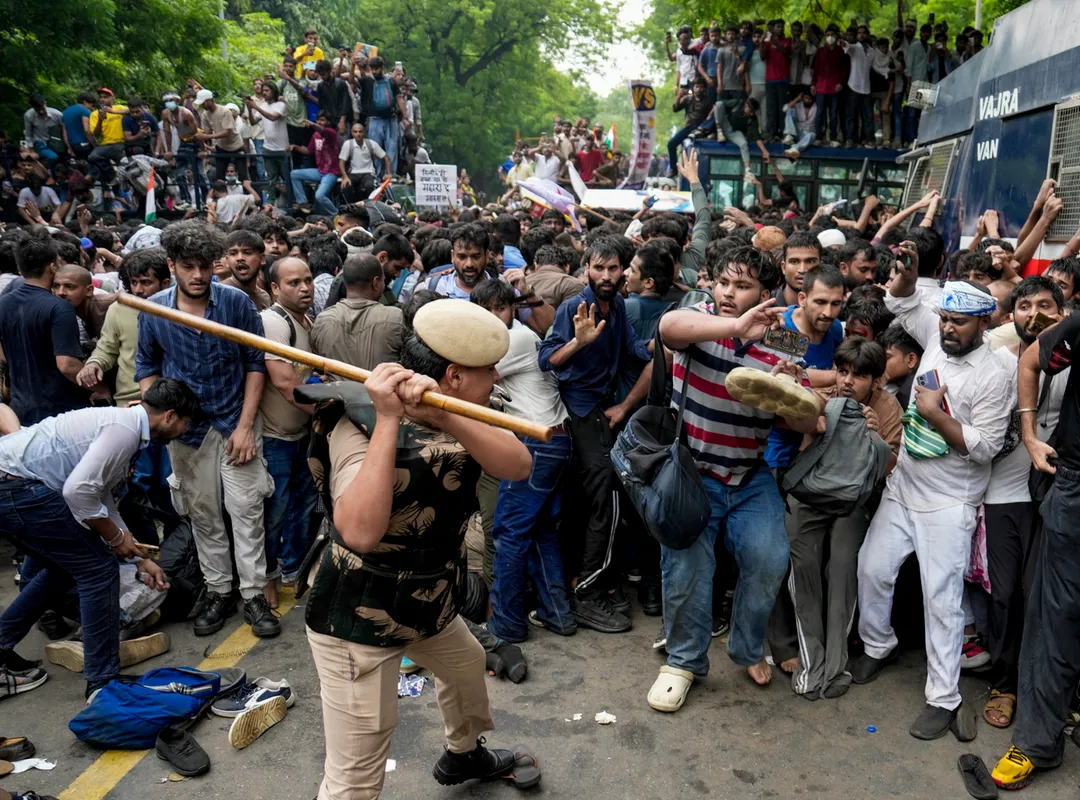
- During the “Sansad Chalo” march, protesters claimed that police used physical force, crowd control techniques, and baton charges (lathi-charge) on mostly peaceful protesters. Videos that were circulated online seemed to depict altercations between demonstrators and police.
- Detentions and Arrests
- Authorities were accused of limiting the right to peaceful protest after several demonstrators were allegedly arrested during protests.
- Internet and Transport Restrictions
- In an effort to contain the situation, authorities stopped metro stations in Delhi and briefly restricted mobile internet access in some places. Protesters denounced these actions as an attempt to restrict communication and mobilization.
- Demand for Investigation
- In an effort to hold police accountable through the judicial system, CJP leaders accused police of abuse and started a campaign to gather images and videos as proof of suspected wrongdoing.
Public Reaction
- Widespread Sympathy for Protesters
- Pictures and videos of police action went viral on social media, bolstering popular support for the cause and evoking sympathy for the students.
- Social Media Mobilization
- The demonstrators’ message was amplified by hashtags, videos, and citizen journalism, drawing national attention to their issues with accountability and education.
- Support from Opposition Parties
- In addition to criticizing the government’s handling of the protests, several opposition politicians and political parties showed support for the demonstrators.
- Calls for Independent Inquiry
- Human rights campaigners, activists, and segments of civil society demanded an unbiased inquiry into claims of excessive force and rights breaches.
What is the Impact of the CJP Protest on Indian Democracy?
- Strengthened Democratic Participation
- Thousands of students and young people were inspired by the demonstration to take an active role in public events instead of being quiet onlookers.
- It proved that young people are capable of mobilizing and organizing around problems that directly impact their future.
- Increased Demand for Government Accountability
- Exam irregularities, paper leaks, and administrative accountability were among the concerns that the movement brought to the attention of the country.
- It reaffirmed the democratic tenet that public institutions must continue to answer to the people.
- Expanded Public Debate
- Education reforms, young unemployment, governance, and transparency were hot subjects in media and political discourse.
- The demonstration assisted in turning a student problem into a more widespread national conversation.
- Tested the Right to Peaceful Protest
- Discussions over civil rights and the constitutional right to peaceful assembly were triggered by allegations of police activity, internet bans, and detentions.
- Human rights groups demanded that allegations of excessive force be thoroughly looked into.
- Increased Youth Political Awareness
- Public policy, governance, and democratic procedures became increasingly important to many young Indians.
- The movement brought attention to how students and first-time voters are becoming more influential in politics.
Conclusion
The CJP Protest on July 21 is much more than just a response to examination disputes. It is now a potent way for young people to voice their dissatisfaction, civic involvement, and calls for institutional responsibility.
The CJP Protest brought issues of transparency, educational equity, governance, and democratic engagement to light by drawing thousands of people to the streets. It’s unclear if the movement will eventually accomplish all of its objectives, but it has already been successful in bringing issues that are important to millions of young Indians to the attention of the country.
Frequently Asked Questions (FAQs)
What is the CJP Protest?
The CJP Protest is a public movement led mainly by students and youth demanding accountability, transparency, and reforms in response to alleged examination irregularities and governance concerns.
Why did the CJP Protest gain national attention?
The protest attracted widespread attention due to large-scale participation, extensive media coverage, and strong support on social media platforms across the country.
What are the main demands of the CJP Protest?
Protesters seek transparent investigations, accountability of responsible officials, educational reforms, and stronger safeguards to protect merit-based opportunities.
What role did students play in the CJP Protest?
Students were the driving force behind the movement, organizing rallies, awareness campaigns, and online initiatives to highlight their concerns.
How could the CJP Protest impact Indian democracy?
The movement has encouraged greater civic participation and increased public discussion about transparency, accountability, and institutional reforms in India.
Sources:
- https://www.bbc.com/news/articles/c07rgpxe51no
- https://www.thehindu.com/news/national/cjp-protest-delhi-jantar-mantar-sonam-wangchuk-july-21-2026/article71247869.ece
- https://www.aljazeera.com/news/2026/7/21/indias-cockroach-protest-movement-halts-marches-after-police-violence
- https://indianexpress.com/article/cities/delhi/delhi-protest-journalist-pellet-injuries-chalo-sansad-march-10801612/
- https://www.newindianexpress.com/live/2026/Jul/21/cjp-protest-live-updates
- https://www.rediff.com/news/report/like-cockroaches-we-will-come-again-women-at-cjp-protest/20260721.htm
Leave a Reply