

Denotification of Jantar Mantar as a Protest Site, 2026
Introduction
On October 12, 2026, the Delhi Police announced the removal of Jantar Mantar from the list of officially recognized protest sites.This action was taken in response to a Supreme Court directive issued on October 9, which required the identification of appropriate alternative locations for public demonstrations.The newly approved venues for protests are Ramlila Ground, Burari Ground, and CBD Ground, all located in East Delhi.Following this decision, legal challenges were filed in both the Supreme Court and the Delhi High Court.
What Is the Denotification of Jantar Mantar?
- Denotification is the official process of removing or canceling an existing designation through a formal administrative notice or order.
- In this instance, denotification means that Jantar Mantar is no longer considered a designated area for holding protests and demonstrations as per the arrangements made by the Delhi Police.
- This change does not imply that the constitutional right to peaceful protest in India has been removed.
- Instead, it alters the officially recognized location where such gatherings can take place under the current permission framework.
- It is important to understand that the right to protest and the right to use a specific public space are separate legal matters.
- While citizens have constitutional freedoms, the use of public areas may be controlled to ensure public order, safety, and the rights of others.
- The legality and fairness of any restrictions depend on the applicable laws, the specific situation, and the decisions made by the relevant authorities and the courts.
Why Was Jantar Mantar Denotified as a Protest Site?
- Supreme Court Directions
- One of the first things that happened after the decision was a Supreme Court order from October 9, 2026.The Court asked for other places to be found and marked for protests.
- The Delhi Police then told the Delhi High Court that Jantar Mantar had been removed from the list of approved protest sites, as per the Supreme Court’s instruction.
- This action is linked to a bigger issue about how officials should choose safe and suitable areas for public gatherings while keeping everyone safe.
- It’s not just a single choice to change where protests happen.
- Public Order and Traffic Management
- Jantar Mantar is in the center of Delhi, close to key government and political buildings.Big protests in this area can cause traffic problems, make it hard for people to walk around, and affect how public services work nearby.
- When deciding if big gatherings can happen, officials need to think about the safety of the people protesting, everyday commuters, local residents, emergency workers, and government offices.
- Moving some protests to bigger spaces might help officials control the number of people and offer better support.
- But this idea works only if the new places are easy to get to, good for hosting different kinds of peaceful protests, and big enough to handle them safely.
- Security Considerations
- New Delhi has key national institutions and important public places that need special attention.When there are big crowds in the city center, it can put more pressure on the police and other security teams.
- Because of this, the government might look for places that have enough room to handle crowds, allow emergency vehicles to get through, and have proper security setups.
- But at the same time, security needs should be balanced with the rights people have under the law.
- Limits should not be used instead of making sure people can express themselves freely and safely.
- Need for Alternative Protest Locations
- The authorities have found three other places where people can hold demonstrations: Ramlila Ground, Burari Ground, and CBD Ground in East Delhi.
- The reason for choosing these new locations is to give people official spots to gather, since Jantar Mantar is no longer on the list.
- However, how well this plan works depends on things like how easy it is to get around, how far the sites are from the center of Delhi, whether there are basic facilities like restrooms and water, and how easy it is to get permission to use these places.
- The real question isn’t just whether there are other places, but whether these places actually give people a real chance to hold peaceful protests.
Jantar Mantar: From Astronomical Observatory to Symbol of Public Protest
- Jantar Mantar is historically linked to astronomy.The Delhi observatory was built in the 18th century by Maharaja Sawai Jai Singh II to help with star observations and calculations.
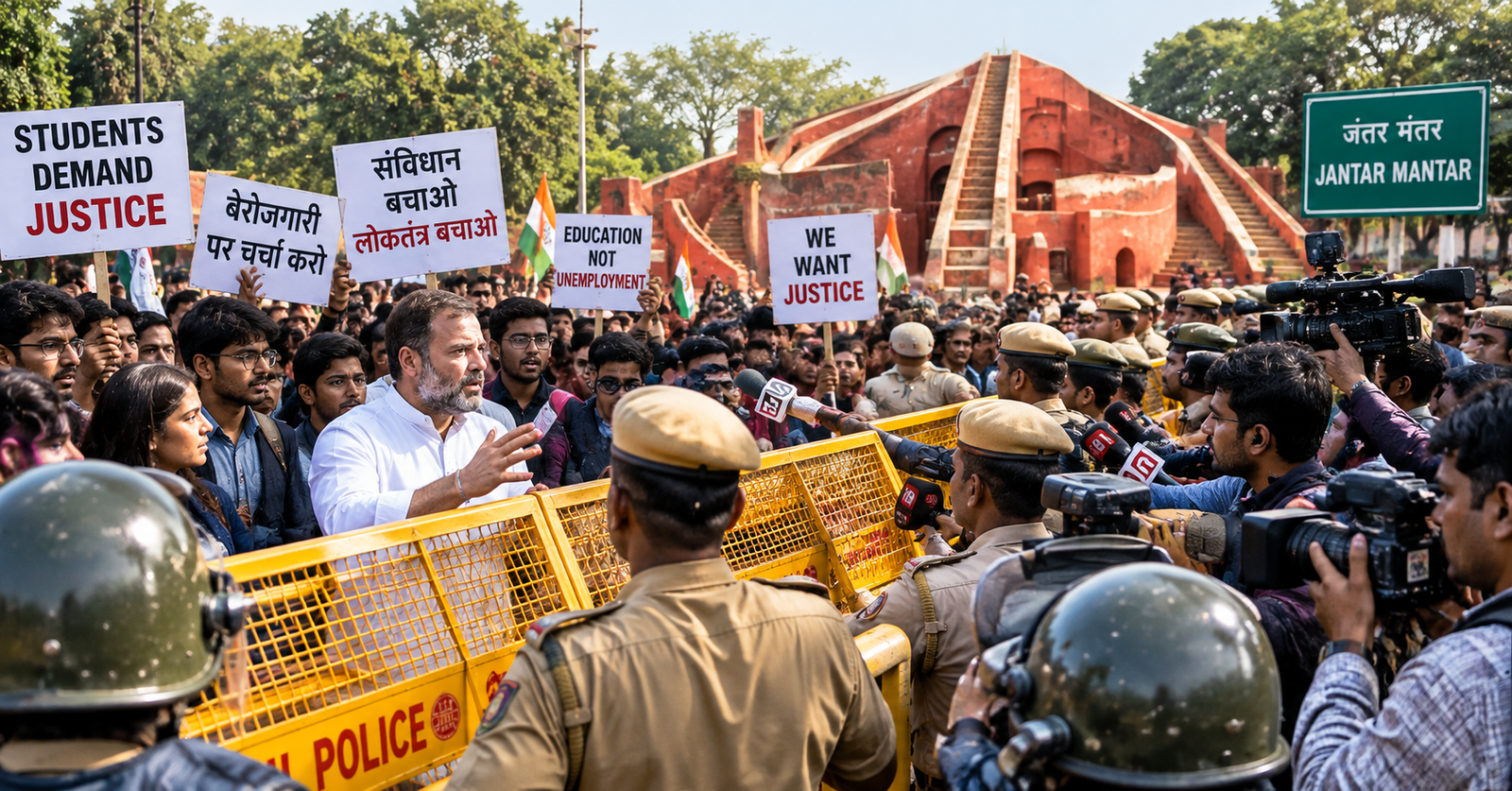
- Over time, the area around it became a famous spot for public gatherings and protests.
- Because of its central position, it became a common place for people to come together to get the attention of leaders, the government, Parliament, and the media.
- For many years, Jantar Mantar was a place where various groups raised important issues.
- These included concerns about government honesty, pension benefits, women’s safety, justice, jobs, and corruption.
- The place became more than just a physical location.
- It came to symbolize the idea that regular citizens can peacefully come together and share their ideas with the country’s political leaders.
- The observatory’s easy access and visibility also helped smaller groups get their voices heard on a national level.
- This long history is why the decision to remove Jantar Mantar from the list of protected sites has sparked more than just talk about traffic or space management.
- For many people, it represents a change in how public spaces are used for democratic expression.
Which New Protest Sites Have Replaced Jantar Mantar?
| Protest site | General location | Potential significance |
|---|---|---|
| Ramlila Ground | Central Delhi | Offers a recognised location for large public gatherings |
| Burari Ground | North Delhi | Provides a larger space away from the immediate central administrative area |
| CBD Ground | Shahdara, East Delhi | Offers an alternative venue for demonstrations in eastern Delhi |
- Burari Ground is about 23 kilometers from Parliament, and CBD Ground is around 14 kilometers away.These distances show a clear difference between the old setup and the new locations.Source: The Indian Express.
- A protest location should be looked at not just by how big it is, but also by how easy it is for people to get there.
- For example, a student group, a workers’ union, or a small group of people might have more trouble organizing a protest if the place is hard to reach or requires extra travel costs or complicated transportation.
- At the same time, bigger grounds can provide more space for large gatherings and help lessen the impact on busy central areas.
- The authorities will need to think about these different factors when making the new changes.
What are Constitutional Rights Related to Peaceful Protest in India?
- Article 19(1)(a): Freedom of Speech and Expression
- Article 19(1)(a) gives citizens the right to speak freely and express their thoughts.
- This right allows people to share their opinions, point out problems with government policies, voice their concerns, and take part in discussions about important matters.
- Holding peaceful protests is one way to use this right.
- Protests can help bring attention to issues that might not get enough notice from the public or government.
- But this freedom is not absolute.
- There are limits set by Article 19(2), such as when speech could disrupt public order or violate other important constitutional principles.
- Article 19(1)(b): Right to Assemble Peacefully
- Article 19(1)(b) gives citizens the right to gather peacefully without using weapons.
- This part of the law sets the basis for peaceful public meetings, marches, and protests.
- However, it does not mean people can gather anywhere they want or break the rules that are in place for public events.
- Article 19(3) allows for some limits on this right, as long as it helps protect India’s sovereignty, unity, and public order.
- Because of this, the government can set rules about when, where, and how people can hold demonstrations.
- These rules still need to follow the law and the Constitution.
- Article 21: Protection of Life and Personal Liberty
- Article 21 ensures that every person’s life and freedom are protected.This is important when talking about public safety, personal security, and how individuals are treated when government actions affect them.
- Even though Article 21 doesn’t directly say that people have the right to protest, it still plays a key role in the bigger picture of the constitution.
- It helps shape how public gatherings and police actions are handled.
- Balancing Rights and Responsibilities
- Peaceful protest needs to find a good balance between people’s right to express themselves and the fair interests of the general public.
- People who protest should follow the rules and not use force, scare others, or break things.
- At the same time, those in charge should make sure the rules for protests are fair and not too strict or unfair.
- So the real issue isn’t whether protests should be controlled at all, but whether the control allows people to still protest peacefully and take part in democracy.
Legal Background: The Supreme Court and the Right to Protest
- In 2018, the Supreme Court dealt with issues related to protests at Jantar Mantar and the Boat Club area in central Delhi.The case brought up the challenge of balancing the right to peaceful assembly with the rights of local residents and the need to maintain public order.
- The bigger legal idea is that peaceful gatherings are a key part of democracy, but government authorities can set some reasonable rules for how these events are organized.
- In October 2026, this balance came back into focus.
- The Supreme Court suggested finding suitable alternative places for protests, and the Delhi Police then decided to take Jantar Mantar off the list of approved locations.
- This move was later challenged in both the Supreme Court and the Delhi High Court.
- These challenges question the legal reasons behind the decision, whether the alternatives are suitable, and how this affects the ability to hold peaceful protests.
- As of October 15, 2026, these challenges are an important part of the ongoing legal discussion.
- It’s important to note that these challenges are not the same as a final court decision on whether the removal was valid.
- The final legal outcome will depend on the court orders, the arguments presented, and any further rulings from the judiciary.
Impact of Jantar Mantar Denotification on Indian Democracy
- Reduced Access to the Centre of Political Power
- One of the key benefits of Jantar Mantar was its position in the middle of Delhi.People holding protests could easily gather in a place close to major government buildings, which helped them get noticed by lawmakers and reporters.
- Moving protests to different areas might make it harder for some people to get there because they would have to travel more.
- It could also affect how visible their actions are to others.
- But the real effect depends on how well the area is connected by transport, how easy it is to use public services, and how well the new places are managed.
- Challenges for Students and Small Organisations
- Students, local groups, worker organizations, and small civil society groups might not have a lot of money or organizational support.
- For these groups, having a place that’s both cheap and easy to get to can really help them plan a protest.
- If other options cost a lot more, these groups might find it hard to take part.
- Governments can help by making it easy to get permission, giving clear info about public transport, and making sure the places they choose have the right facilities.
- Implications for Media Visibility
- Protests in central Delhi often get noticed because they are close to important government buildings and where news media is based.
- If a protest moves to a different place, it might not get as much attention.
- But the media also looks at how important the issue is, how many people are involved, how much people care about it, and how easy it is for reporters to cover the event.
- You can’t tell for sure how much the public will remember or learn about it just from knowing about the protest.
- Public Safety and Traffic Management
- The change might bring some advantages for organizers if bigger, more prepared areas make it simpler to handle groups of people and lower the impact on the city center.
- Setting specific places could also help in making it easier to reach emergency services, improve cleanliness, provide clean water, and other important services.
- These possible benefits should be looked at along with what people who protest have experienced and how easy it is to get to these new places.
- Public Confidence in Democratic Institutions
- People often hold peaceful protests to voice worries they feel haven’t been properly handled through other ways.
- If the other options and the permission process are fair, these changes could help manage public events better.
- But if getting permission becomes too hard, people might wonder if they can really use their constitutional rights freely.
- So, keeping public trust needs clear rules, fair enforcement, and real chances for peaceful gatherings.
Concerns and Criticism Regarding Denotification
- Some people might say that taking protests out of the center of Delhi could make them less visible and harder for certain groups to join.
- A place’s political importance isn’t just about how many people it can hold.
- How close it is to leaders, public transport, and news outlets can also affect how well a protest works.
- Another worry is whether the new rules for getting permission to protest will be clear and fair.
- If applications are denied without reason or if there aren’t good options, just having places to protest might not really help people take part properly.
- These worries don’t mean the decision is illegal on its own.
- They show things that officials and judges might need to look at when checking if the decision is reasonable and what effects it has.
- In a democracy, the goal should be to make sure that rules for public order help people protest peacefully whenever it’s possible, instead of making it harder than it needs to be.
Conclusion
In October 2026, Jantar Mantar was taken off the list of approved places for protests in New Delhi, which is a major change in how public gatherings are controlled.
After the Supreme Court gave instructions, the Delhi Police chose Ramlila Ground, Burari Ground, and CBD Ground as new places where people can hold protests.
This decision has caused discussions about keeping public order, making sure these places are easy to get to, how visible protests are, and the right to peacefully gather as protected by the constitution.
Frequently Asked Questions (FAQs)
Why was Jantar Mantar taken off the list of approved protest areas?
On October 12, 2026, the Delhi Police removed Jantar Mantar from the list of approved protest sites after following a court order that asked them to find other places for public gatherings. They chose Ramlila Ground, Burari Ground, and CBD Ground as the new approved areas.
Is Jantar Mantar still an official place for protests?
As of October 15, 2026, Jantar Mantar is no longer listed as an official protest site according to the Delhi Police notice. This change has been questioned in both the Supreme Court and the Delhi High Court, and the legal battle may influence its future status.
What areas have replaced Jantar Mantar for protests?
The three new approved sites for protests are Ramlila Ground in central Delhi, Burari Ground in north Delhi, and CBD Ground in the Shahdara area of East Delhi.
Does removing Jantar Mantar from the list take away the right to protest in India?
No. Removing a specific place from the approved list doesn’t take away the basic right to peaceful protest as protected by the Constitution.Article 19(1)(b) ensures the right to peaceful assembly, as long as it follows the reasonable restrictions under Article 19(3).
Why is Jantar Mantar important in Indian democracy?
Jantar Mantar became a key place for campaigns on issues like social justice, government responsibility, jobs, pensions, and more. Its central location helped protesters get attention from the public and media, making it a strong symbol of peaceful protest.
Sources:
- https://www.thehindu.com/news/cities/Delhi/jantar-mantar-denotified-as-protest-site-based-on-sc-order-police-to-high-court/article71581169.ece
- https://timesofindia.indiatimes.com/india/pleas-filed-in-sc-delhi-hc-against-de-notification-of-jantar-mantar-as-protest-site/articleshow/134946256.cms
- https://indianexpress.com/article/cities/delhi/jantar-mantar-denotified-protest-site-delhi-police-supreme-court-order-10920035/
- https://www.hindustantimes.com/india-news/jantar-mantar-denotification-as-protest-site-based-on-supreme-court-orders-delhi-police-tells-high-court-101791937510772.html
Leave a Reply