

Namami Gange Programme, 2026: Achievements and Challenges
Introduction
The government has emphasized how Jan Ganga, the Namami Gange Program’s public involvement pillar, has helped turn river conservation from a government-led endeavor into a movement led by the people.
What is the Namami Gange Programme?
In June 2014, the Indian government authorized the Namami Gange Program, an integrated conservation initiative. It was started as a flagship project to revitalize the Ganga River and its tributaries and lower pollution levels. The Ministry of Jal Shakti’s National Mission for Clean Ganga (NMCG) is in charge of carrying out the initiative. In order to ensure long-term sustainability, the mission integrates ecological restoration with infrastructural development.
The programme focuses on:
- Pollution abatement
- Sewage treatment infrastructure
- Riverfront development
- Industrial effluent monitoring
- Biodiversity conservation
- Afforestation
- Public awareness campaigns
- Sustainable river management
- Rural sanitation and Ganga Gram initiatives
What is the Objectives of the Namami Gange Programme?
- Pollution Reduction
- Through sophisticated sewage treatment facilities and stringent industrial monitoring, the initiative aims to limit pollutants entering the river.
- River Rejuvenation
- By preserving environmental flows and promoting aquatic habitats, the goal seeks to restore the Ganga’s ecological integrity.
- Sustainable Development
- In regions inside the Ganga basin, it encourages sustainable urban and rural development.
- Community Participation
- Public awareness campaigns help people get involved in keeping rivers clean and healthy.
- Biodiversity Protection
- The program helps protect animals like the Gangetic Dolphin, turtles, otters, and other water creatures.
What are the Key Components of the Namami Gange Programme?
- Sewage Treatment Infrastructure
- Untreated sewage is a major cause of river pollution.Because of this, the mission has focused on building and upgrading Sewage Treatment Plants (STPs).
- Big investments have been made to set up modern treatment centers that can process millions of liters of wastewater each day. These centers stop untreated sewage from getting into rivers.
- Industrial Pollution Control
- Industrial units near the river are checked in real time to make sure they don’t pollute the water.If an industry doesn’t follow environmental rules, it gets punished by the authorities.
- River Surface Cleaning
- Special teams clean the river by removing floating trash, plastic, and other harmful materials.
This has made parts of the river look much cleaner and better.
- Special teams clean the river by removing floating trash, plastic, and other harmful materials.
- Afforestation Initiatives
- Planting trees along the banks helps prevent soil from washing away, brings more water to the underground layers, and supports more types of plants and animals.
- Biodiversity Conservation
- The program also helps protect species that are at risk of disappearing and brings back natural habitats for fish and other water creatures. Areas like wetlands and parks that support wildlife are being created along the Ganga river.
- Riverfront Development
- Upgrading ghats, crematoria, and public places along the river makes the area cleaner and preserves its cultural importance.
What are the Major Achievements of the Namami Gange Programme?
- Expansion of Sewage Treatment Capacity
- One of the program’s biggest successes has been improving the sewage treatment system.
- By 2026, many sewer-related projects have been approved and a lot of them have already been finished.
- This has added a lot more sewage treatment ability in the Ganga area.The program has built many sewage treatment plants, which has greatly cut down the amount of dirty water being dumped into the river.
- Project Implementation Progress
- By February 2026, 524 projects had been approved under the programme, and 355 of them were already finished.This shows big progress toward reaching the mission’s goals.
- Strengthening Urban Sanitation
- Many cities along the Ganga have seen major improvements in their sanitation systems.
- New sewer lines and treatment plants have helped reduce pollution going into the river.
- Biodiversity and Wetland Conservation
- The mission has also helped create biodiversity parks, protect wetlands, and restore natural habitats.
- These efforts are meant to keep the Ganga’s ecosystem healthy and balanced.
- International Recognition
- The work done through the Namami Gange Programme has gained international attention.
- It is seen around the world as an important effort to clean up a river while also involving local communities.
- Technology-Driven Monitoring
- New tools like online dashboards and real-time water quality checks have made it easier to track and manage the projects. This has made the process more open and responsible.
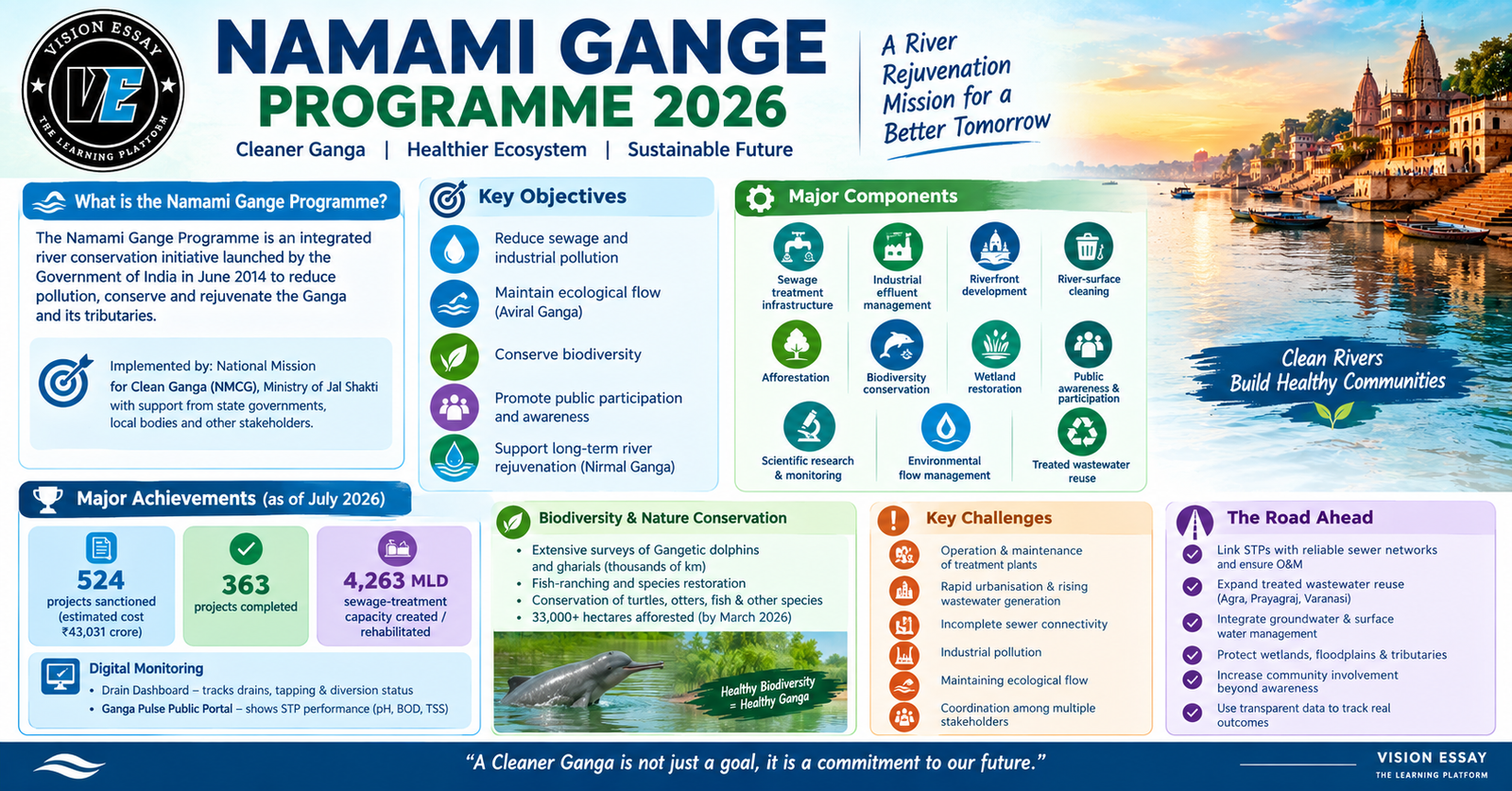
What Challenges Facing the Namami Gange Programme?
- Untreated Sewage Discharge
- A lot of dirty water from cities and towns near the Ganga is still flowing into the river, making the water less clean even though there are sewage treatment plants built.
- Industrial Pollution
- Factories like tanneries, paper mills, textile units, and chemical plants often put harmful stuff into the river, making it hard to keep track of and control pollution.
- Delay in Project Completion
- Projects like sewage treatment plants and sewer systems have been delayed because of problems getting land, not enough money, and slow government processes.
- Operation and Maintenance Issues
- Many treatment plants don’t work well because they aren’t properly maintained, there’s not enough electricity, and the technology isn’t efficient enough.
- Rapid Urbanization
- As more people move into areas around the Ganga, the amount of waste created exceeds what the current treatment systems can handle.
- Agricultural Runoff
- Too much use of fertilizers and pesticides in farming leads to pollution when these chemicals wash into smaller rivers and the main Ganga.
- Weak Coordination Among Agencies
- To clean up the river properly, there needs to be good teamwork between national, state, and local governments, which isn’t always easy.
- Solid Waste and Plastic Pollution
- Throwing away plastic, trash, and religious items into the river keeps hurting its natural balance.
- Biodiversity Conservation Challenges
- Keeping species like the Gangetic dolphin and the river’s environment healthy needs ongoing efforts to protect them.
- Public Awareness and Participation
- For lasting change, people need to get involved, change how they act, and learn more about how to care for the river.
How does Community Participation under the Namami Gange Programme Promote River Conservation?
- Jan Ganga Initiative
- Jan Ganga is part of the Namami Gange Programme and focuses on involving the public in river conservation.It is based on the idea of Jan Bhagidari, which means getting people to take part.
- The goal is to change river protection from something the government does alone into something that communities help with.This is done by increasing awareness, encouraging people to get involved, and making them feel responsible for the rivers.
- River Cleanliness Drives
- Programs like Ganga Swachhta Pakhwada (March 16–31) bring together students, volunteers, community groups, and other interested parties from the Ganga basin states to take part in clean-up efforts, helping to make keeping the river clean a common responsibility for everyone.
- Plantation and Riverbank Restoration
- Plantation activities like “Ek Ped Maa Ke Naam” encourage people to join in planting trees, which helps hold the riverbanks together, prevents soil from washing away, and brings back the natural balance of river areas.
- Cultural and Awareness Programmes
- Ganga Utsav, along with efforts like Swachhta Hi Seva and International Day of Yoga, helps connect communities with rivers through events like shows, performances, and talks.
- Innovative Outreach Initiatives
- Activities like the BSF all-women Ganga river rafting trip raise awareness about the environment and bring people closer to river conservation work.
Conclusion
The future of keeping rivers healthy depends on mixing science, sustainable actions, and people getting involved.The Namami Gange Programme, through its Jan Ganga initiative, has proven that just having the government work alone isn’t enough to clean up the Ganga properly.This program helps change people from just watching to becoming active participants, which creates a better, more lasting way to protect rivers.It makes communities take charge of taking care of their natural environment for the long term.
Frequently Asked Questions (FAQs)
What is the Namami Gange Programme?
The Namami Gange Programme is a major initiative started in 2014 to reduce pollution, protect and restore the Ganga river and its tributaries.
What is Jan Ganga?
Jan Ganga is a part of the Namami Gange Programme that encourages people in communities to take part in keeping the river clean and healthy.
What is Ganga Swachhta Pakhwada?
Ganga Swachhta Pakhwada is a yearly event that takes place from 16th to 31st March to involve the public in helping to clean and protect the Ganga.
Who are Ganga Praharis?
Ganga Praharis are local volunteers who help in protecting the river, its wildlife, and spread awareness about environmental care.
What is the significance of Ganga Utsav?
Ganga Utsav is a big event that brings the community together to celebrate the Ganga as India’s national river through cultural shows, displays and discussions.
Sources:
- https://nmcg.nic.in/NamamiGanga.aspx
- https://www.pib.gov.in/PressReleasePage.aspx?PRID=2244007®=48&lang=2
- https://www.researchgate.net/publication/393149837_Evaluating_the_Effectiveness_of_the_Namami_Gange_Program_A_Legal_and_Administrative_Perspective
- https://timesofindia.indiatimes.com/city/varanasi/namami-gange-success-manifests-in-better-river-quality/articleshow/110647606.cms
- https://en.wikipedia.org/wiki/Namami_Gange_Programme
- https://swachhindia.ndtv.com/3-years-of-namami-gange-where-do-we-stand-5622/
Leave a Reply